What AI video editing can actually do in 2026
AI has moved from gimmick to genuinely useful, and it's worth being specific about what it does well today:
- Text-based editing. Tools transcribe your footage and let you edit the video by editing the transcript — delete a sentence, delete the clip. This alone removes hours of scrubbing.
- Silence, filler and "um" removal. AI detects and strips dead air and filler words automatically — a huge time-saver on interviews, podcasts and talking-head content.
- Auto-captions and subtitles. Fast, increasingly accurate transcription and styled captions in multiple languages — once tedious, now near-instant.
- Auto-reframe and repurposing. AI reformats a landscape edit into vertical for Reels, TikTok and Shorts, keeping the subject in frame — great for turning one asset into many.
- Rough-cut assembly. For structured footage (interviews, webinars, event coverage), AI can build a first assembly or a highlight cut you then refine.
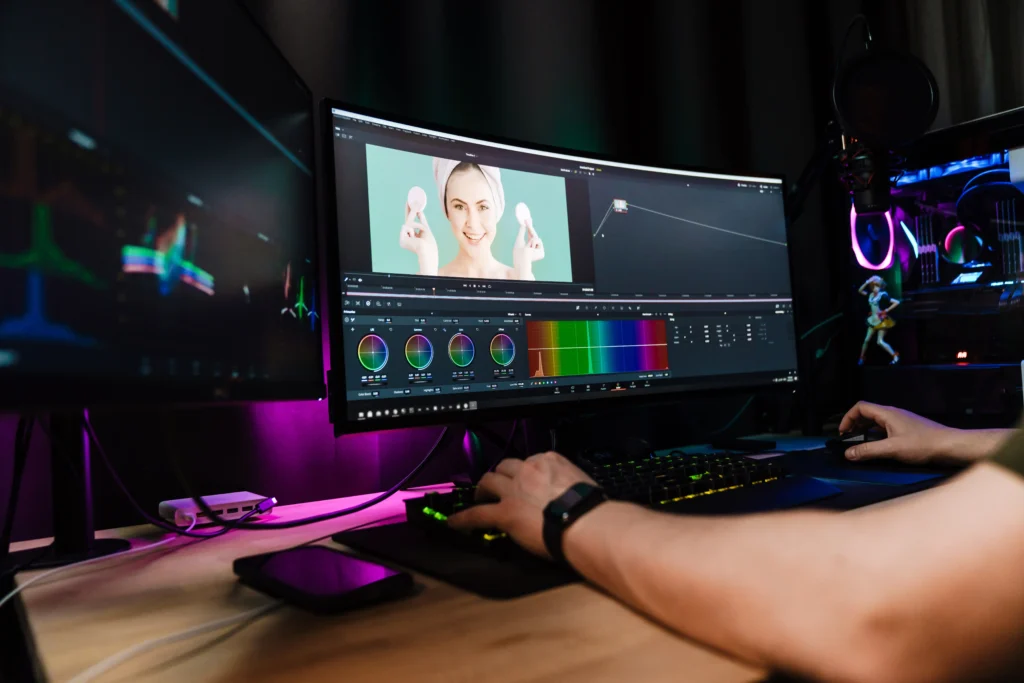
- AI colour matching and audio cleanup. Automatic colour balancing across clips and noise reduction that used to need a specialist pass.
- Generative and b-roll assistance. Text-to-video, generative fill, AI stock and auto-suggested b-roll can fill gaps — useful, if used carefully.
- Scene detection and tagging. AI can sort and label large volumes of footage so an editor isn't hunting for the right shot.
Taken together, these can cut the mechanical portion of an edit dramatically. That's real, and pretending otherwise would be dishonest. But notice the pattern: every one of these is a task, not the decision behind it.
What AI still can't do
Here's where the "AI will replace editors" narrative falls apart. The parts of editing that determine whether a video actually lands are exactly the parts AI is worst at:
- Story and structure. Knowing which 40 seconds of a two-hour wedding, or which three lines of a rambling interview, carry the whole emotional weight — and in what order — is judgement, not pattern-matching. AI can assemble; it can't decide what matters.
- Emotion and pacing. The difference between a cut that makes someone cry and one that's technically fine is timing measured in frames, tied to music, breath and feeling. AI doesn't feel the room.
- Taste and brand fit. Every client and brand has a look, a tone, a set of unspoken rules. Matching them — and knowing when to break them — is taste built over years, not a preset.
- Handling messy, real-world footage. Real projects arrive with mismatched cameras, bad audio, missing shots and contradictory notes. AI stumbles on ambiguity; human editors are hired precisely to solve it.
- Client relationship and revisions. Interpreting vague feedback ("make it more us"), pushing back when a request would hurt the film, and being accountable for the result — none of that is something you hand to a model.
- Judgement and responsibility. When a wedding film or brand campaign goes out, someone has to stand behind it. AI can't own the outcome; a studio can.
AI is a spectacularly fast assistant with no taste and no accountability. That's a tool, not a replacement.
Which editing tasks AI automates vs which need a human
The honest way to look at it is task by task.
The tasks in the "automatable" column are real hours saved. The tasks in the "human" column are the ones clients actually pay for.
What's really changing: the editor's job, not the editor
The mistake in the "AI replaces editors" framing is treating editing as one job. It's two: the mechanical work (assembling, syncing, cleaning) and the creative work (deciding what the video says and how it feels). AI is eating the mechanical half. That doesn't delete the editor — it shifts where the editor spends time.
An editor in 2026 spends less time scrubbing and syncing and more time on story, grade, sound design and client craft. The role is moving up the value chain, not disappearing. Historically, every leap in editing technology — non-linear editing, cheaper cameras, cloud collaboration — was predicted to end the profession. Each one instead raised the baseline and increased demand for video, because making video got easier and every business suddenly needed more of it. AI is the same pattern, faster.
Will AI replace editors in your niche?
The answer shifts by the kind of work:
- Wedding video. Safest of all. Weddings are pure emotion, one-time footage, and couples who care about feeling, not efficiency. AI can help cull and caption; it cannot build the film a couple watches on their anniversary. We go deeper in our piece on AI vs human wedding video editing.
- Corporate and agency work. Here AI genuinely speeds up volume — captions, cutdowns, versioning — but brand consistency, messaging and client management keep humans central. Agencies use AI to handle more client video, not to fire their editors.
- Social / short-form and creators. The most exposed to automation for simple, high-volume clips — but also the space where standing out is everything, and "everyone's using the same AI template" quickly becomes a disadvantage. Volume gets automated; distinctiveness doesn't.
- Real estate and high-volume utility video. Templated, repetitive edits are the most automatable. Even here, consistency, branding and turnaround reliability still favour a managed human+AI workflow over pure automation.
The real risk isn't AI — it's editors who don't use it
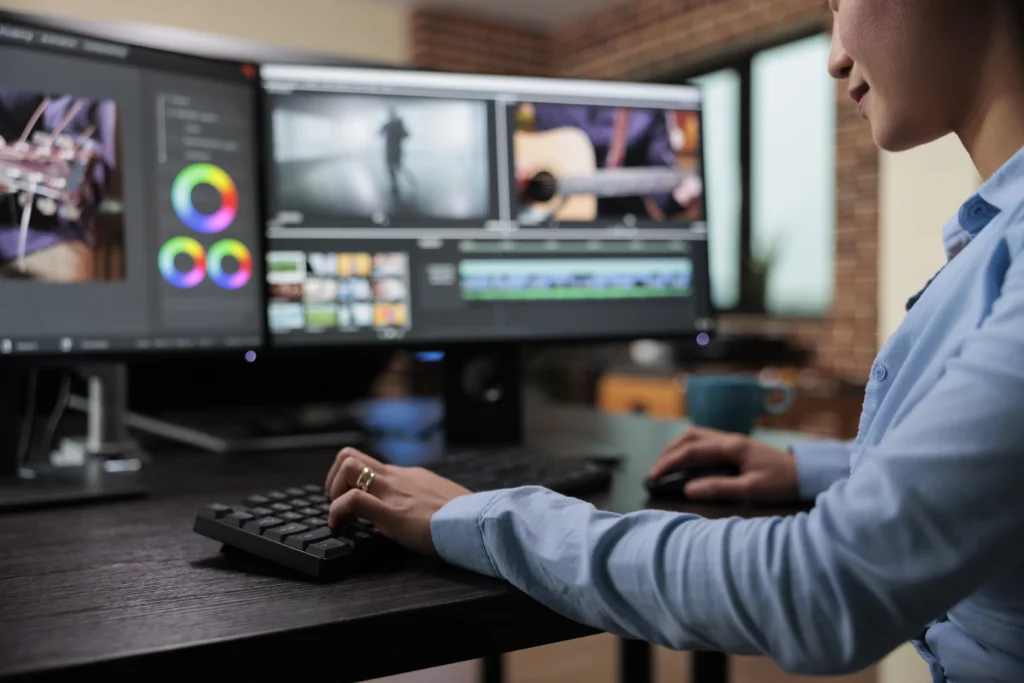
If there's a threat, this is it: not "AI replaces editors," but "editors who use AI outcompete editors who don't." An editor or studio using AI to cull, caption and rough-cut can take on more work, deliver faster and stay price-competitive — while one clinging to fully manual workflows gets undercut on speed. The winners treat AI as leverage on the boring parts so they can spend their time on the parts that win clients.
For a business, that reframes the whole question. It's not "should I worry AI will replace my editors?" It's "is my editing set up to use AI where it helps and keep humans where they matter?"
What this means for studios, agencies and video businesses
If you run a studio or agency, the practical takeaways are:
- Don't cut your editing capability betting AI will cover it. You'll ship faster garbage and lose the clients who can tell the difference.
- Do adopt AI for the mechanical layer — transcription, captions, versioning, first assemblies — to increase throughput without adding headcount.
- Keep human judgement on story, grade and client relationships. That's your product; it's what buyers pay for.
- Rethink capacity, not quality. AI plus a strong editing team means you can take on more projects at the same quality — a growth lever, not a cost cut.
The studios that win the next few years won't be the cheapest or the most automated. They'll be the ones that pair human craft with AI speed, and can deliver more good work, reliably.
How this shapes the outsourcing decision
For many video businesses, this is where outsourcing becomes relevant. Building an in-house team that's both creatively strong and fluent in the newest AI tools is expensive and slow. A dedicated editing partner that already runs a human+AI workflow lets you get the speed of AI and the judgement of experienced editors without hiring for both. You keep the client relationship and creative direction; the partner supplies the editing capacity, using AI where it speeds delivery and humans where it decides quality. If you're weighing this, our guide on outsourced video editing covers how the model works.
How Cut Pro Media approaches AI and editing
Cut Pro Media's answer to this question is the one we'd give any studio: humans lead, technology assists. Cut Pro Media has edited video since 2013, delivering 20,000+ videos with a dedicated editing team — real editors making the story, pacing and brand decisions that clients are actually paying for. Where modern tools genuinely speed up the mechanical work without touching quality, they earn their place; where a decision needs judgement, a human makes it. It's why the model still runs on a dedicated team, hands-on revision work on every project (up to two hours; music changes aren’t included) and a real person accountable for every delivery — the exact things AI can't provide.
If you'd rather put experienced human editors on your projects than gamble on full automation, that's what outsourcing to a dedicated team gives you. Start a risk-free project.